
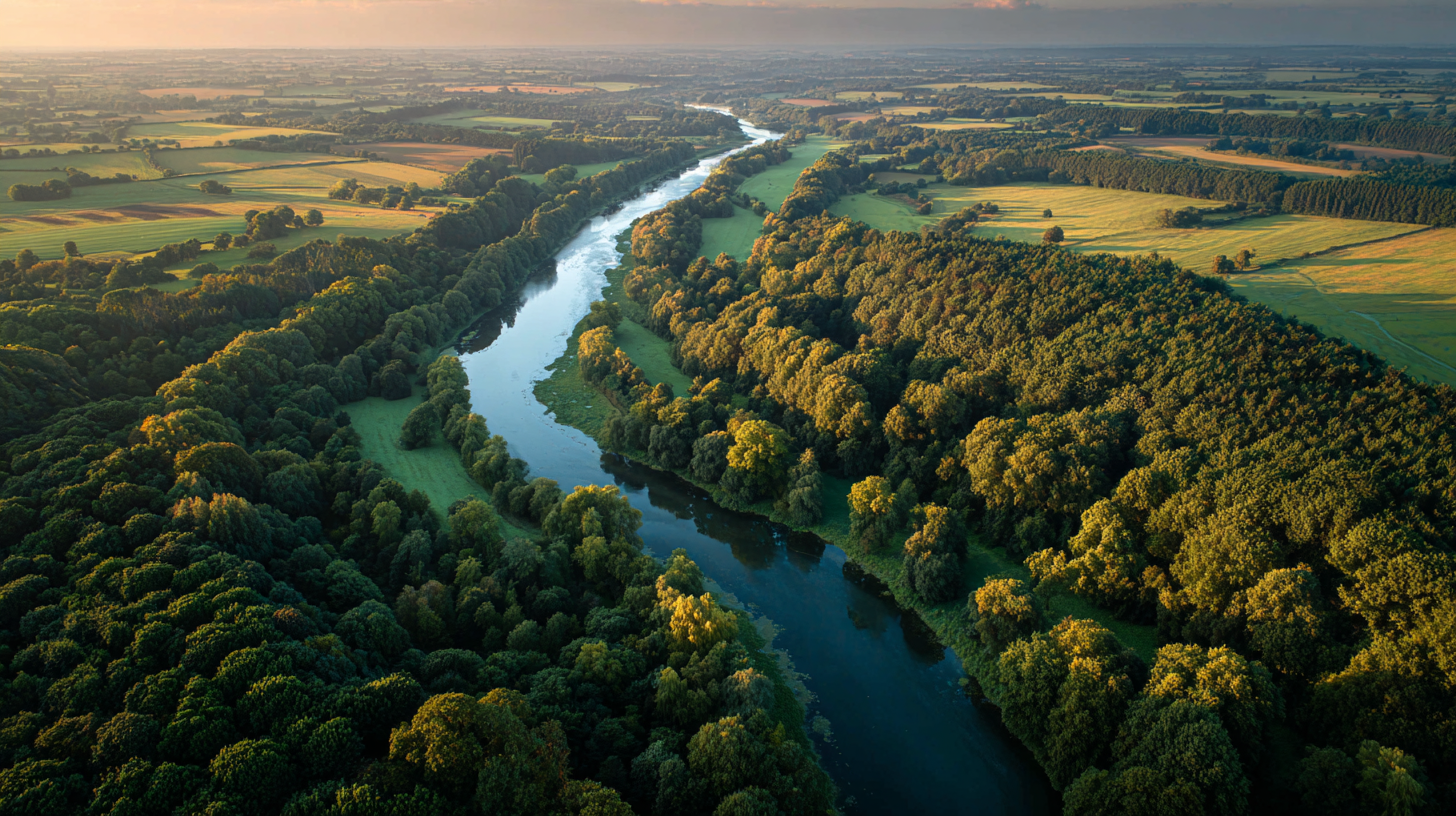
For centuries, nature has been treated as free. Forests absorbed carbon, wetlands filtered and stored water, soils produced food and ecosystems buffered extreme weather — all without appearing on a balance sheet. The entire system of producing value, from markets to manufacturing, was built on the assumption that these services would endure indefinitely.
That assumption is now breaking down.
Nature should not be seen as a backdrop to economic activity; but as critical infrastructure. And like any infrastructure run down through decades of under-investment, the consequences are now manifesting as economic and security risks. Flood losses rise as catchments degrade. Food systems become more volatile as soils and pollinator populations decline. Insurance retreats from regions exposed to escalating climate shocks. This is no longer an environmental concern alone — it can be seen as question of national resilience.
Biodiversity loss and climate change are frequently treated as separate issues. In reality, they are entirely connected. Degraded ecosystems store less carbon, absorb less water and recover more slowly from extreme events. Without functioning nature, there can be credible route to net zero and no durable defence against climate volatility. Globally, wildlife populations have declined by over 70 per cent in the past fifty years.1 In the UK, levels of species loss place us among the most nature-depleted countries in the world — directly undermining food security, water security and energy system stability.2
Nature as National Security
This link between nature and resilience is now increasingly being formally recognised at the highest levels of government. A recent national security assessment produced through the UK's Joint Intelligence Committee — overseen by MI5 and MI6 — explicitly identifies biodiversity loss and ecosystem collapse as threats to UK national security.3 The assessment concludes that nature loss acts as a "threat multiplier", increasing the risks of geopolitical instability, supply-chain disruption, mass migration and conflict.
"Environmental degradation is no longer viewed as a peripheral risk; it is now understood as a driver of systemic instability."
Environmental degradation is no longer viewed as a peripheral risk; it is now understood as a driver of systemic instability.
For investors, this reframes natural capital from a values‑based allocation into a strategic one. Assets such as forestry, peatland restoration, regenerative agriculture and biodiversity markets deliver services the economy cannot sucesssfully function without, while exhibiting characteristics long associated with infrastructure: tangible underlying assets, long time horizons and increasingly robust policy support. Their return profile is equally distinctive. Natural capital tends to show low correlation with traditional equities and bonds — an increasingly rare attribute — with revenues linked to real outputs such as food production, construction materials and emerging carbon and biodiversity markets. Combined with growing regulatory demand, this is creating largely predictable, long‑term revenue streams, mirroring the forces that shifted infrastructure from a marginal allocation to a core component of institutional portfolios.
Regulation Creating Investable Demand
One-fifth of the ecosystem services the global economy relies upon, are at risk of collapse.3 Markets cannot ignore scarcity forever. Typically regulation follows depletion, and regulation creates investable demand. In the UK, mandatory Biodiversity Net Gain requirements are increasingly compelling developers to fund habitat creation,5 while nature-related disclosure frameworks are making ecological risk visible within financial decision-making.6
For Investors thinking in decades rather than quarters, this presents a clear signal. Natural capital can offer diversification, inflation linkage through real assets, and returns driven by structural demand rather than sentiment. More fundamentally, it is about protecting the systems that underpin economic continuity.
Sources
- WWF & ZSL, Living Planet Report 2024. wwf.org.uk
- State of Nature report, Wildlife Trusts (2023). wildlifetrusts.org
- IPBES Global Assessment; UK National Security Assessment summary. gov.uk
- UK Government, Global Biodiversity Loss, Ecosystem Collapse and National Security (Joint Intelligence Committee, Jan 2026). gov.uk
- UK Government guidance, Environment Act 2021 / BNG (2024). gov.uk
- Taskforce on Nature-related Financial Disclosures. tnfd.global