
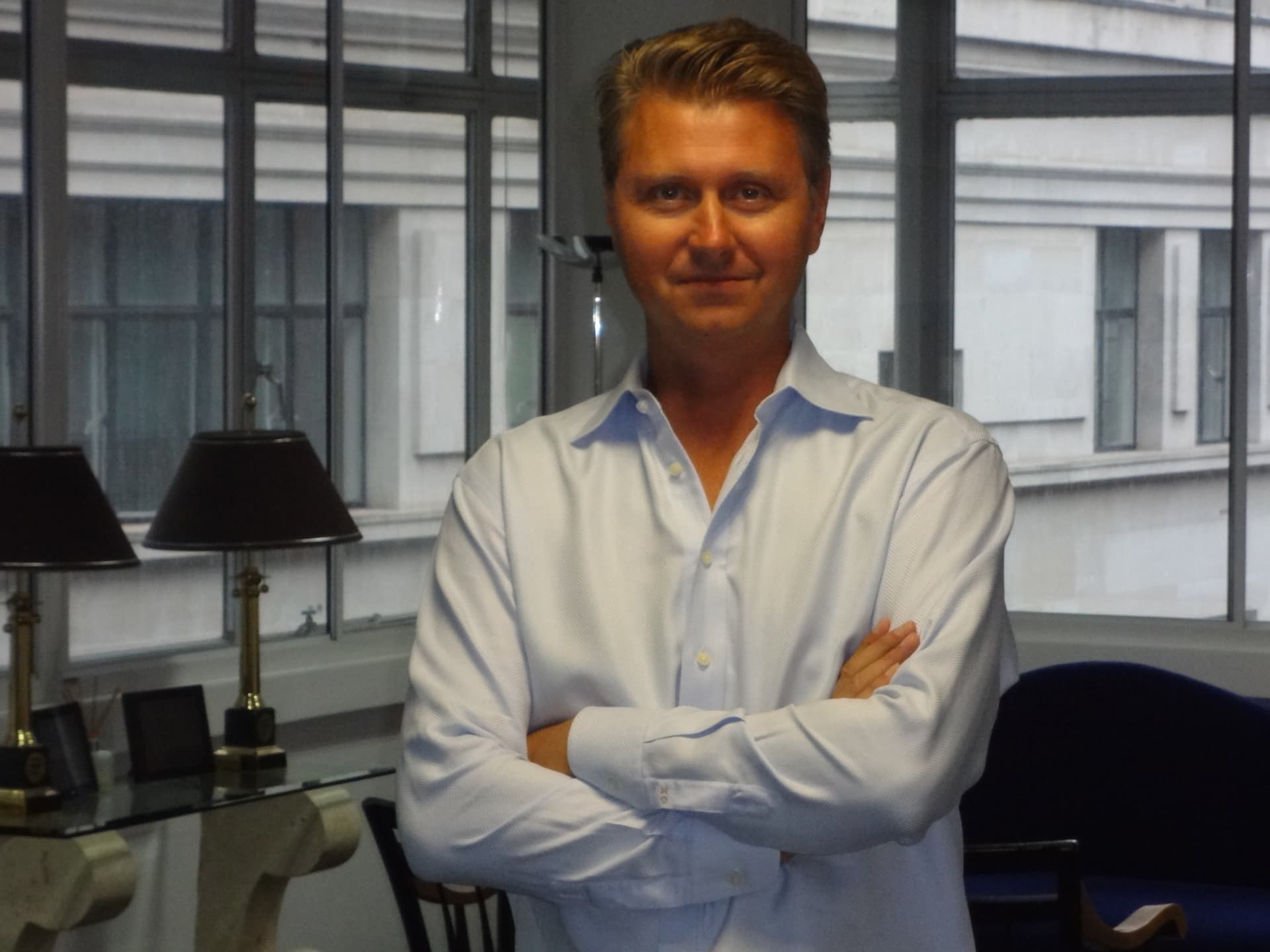
Per Wimmer answers questions the way some investors write mandates: in short declarative phrases, with the qualifications left out. Asked where he sees opportunity, he names two asset classes and stops. Asked about governance and succession, he offers four words. The brevity is not evasion — read together, the answers describe a position that is quite specific about what it will and will not do.
The Danish financier founded Wimmer Family Office in London in 2011, after senior roles at Goldman Sachs, Collins Stewart and MAN Group. The office was built around a wealth-protection strategy combining real estate with absolute-return and trend-following exposures. Its stated investment approach spans direct real estate equity and debt, selected later-stage private-equity opportunities, absolute-return hedge funds, long-only strategies and quantitative trend-following, with fund allocations assessed through quantitative performance screening followed, where appropriate, by further diligence on the manager, administrator and underlying structure.
That work sits alongside an unusually varied personal record: Wimmer is also an entrepreneur, author, adventurer and astronaut-in-training, with philanthropic initiatives built around encouraging young people to pursue ambitious goals. Ahead of the UK Family Office Summit Oxford 2026, UK Private Wealth Magazine put a standard set of questions to him. His answers appear as supplied.
Which asset classes, sectors or investment themes are you most focused on today, and where do you see the greatest opportunities over the next decade?
“UK and European real estate. Series C or later stage private equity.”
Both halves of that answer carry a boundary. Within real estate, the family office states that it considers equity and debt development opportunities, including ground-up and value-add investments across the UK and Europe, with selective consideration of North America. Its later-stage private-equity interests extend to aerospace, technology, fintech, consumer businesses, natural resources and energy. The preference for Series C and later also marks out what is excluded: the office states that it does not currently allocate to venture-capital funds or private-equity funds.
What do you believe is the biggest challenge currently facing family offices and long-term investors?
“Sustained earnings growth for listed companies. Wealth preservation.”
"“Sustained earnings growth for listed companies. Wealth preservation.”"
Two items, presented without connective tissue, though the connection is not hard to draw: preserving capital is harder where public-market valuations rest on earnings growth that may prove difficult to sustain. For an office whose central objective is protection rather than maximum return, that is less a market view than a description of why the mandate is shaped as it is.
How important are governance, succession planning and stewardship in preserving wealth across generations?
“Important but not easy.”
Four words, and among the more honest answers given to that question in this edition. Governance appears in almost every family-office survey as a stated priority and in a minority of them as a completed piece of work; the research features elsewhere in this issue put formal succession plans at roughly a third of offices. Wimmer does not claim the problem is solved.
How do you see technology and artificial intelligence influencing the future of investing?
“Certainly a part of future investing.”
No prediction, and no claim to be early. For an office already holding technology, aerospace and quantitative strategies, the position is consistent with the rest: participate where the risk can be assessed, and decline to forecast the rest.
This interview is provided for general editorial and informational purposes only and does not constitute investment, legal, tax or other professional advice.