
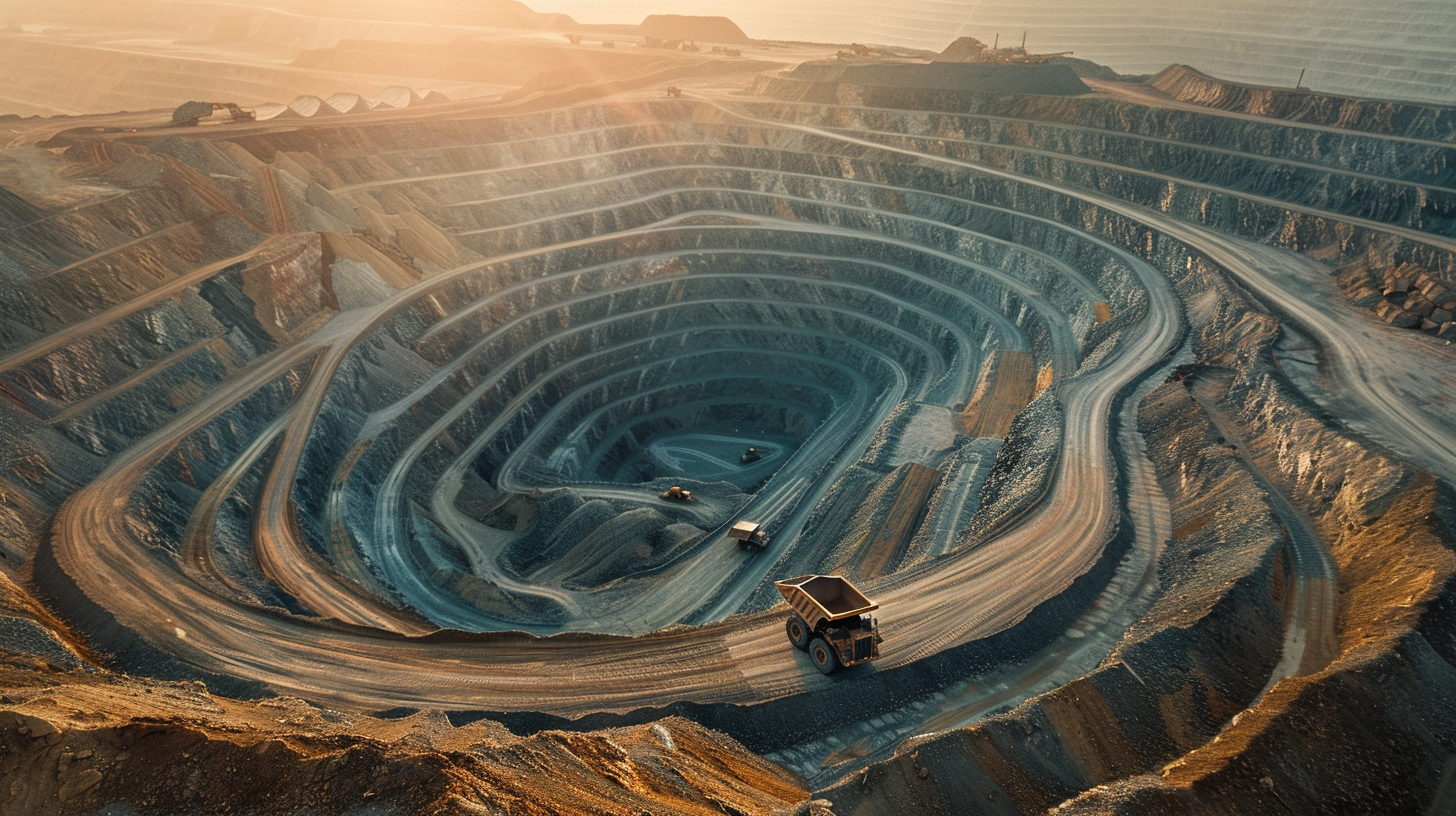
The energy transition is often framed as a question of capital allocation. Increasingly, however, it is becoming a question of geology—and for long-term investors, that distinction matters.
Copper sits at the centre of this shift. It is fundamental to electrification, grid expansion, and renewable energy systems, and remains one of the few industrial metals that is difficult to substitute at scale. For asset allocators, this positions copper not simply as a commodity exposure, but as a strategic input into the broader transition economy.
Demand dynamics are relatively well understood. Less widely appreciated are the constraints on supply.
A significant portion of current global copper production originates from deposits discovered decades ago, in some cases over a century ago. These assets are maturing. Ore grades have declined over time, increasing both capital intensity and operational complexity. At the same time, the pipeline of new large-scale discoveries has remained limited.
This dynamic is increasingly reflected in forward-looking analysis. The International Energy Agency has highlighted that demand for critical minerals such as copper is expected to rise materially under electrification scenarios, while supply growth remains constrained by both geological availability and development timelines. The resulting imbalance is not simply cyclical, but structural.
For asset allocators, this raises an important consideration: supply risk is becoming a defining feature of the investment case.
The Geological Reality
The nature of that risk is geological. Large-scale porphyry systems—often referred to as "giant" deposits—account for the majority of global copper supply due to their scale and favourable metallurgical characteristics. These systems are inherently scarce, forming only under specific geological conditions and in relatively limited regions.
Chile remains one of the most important of these environments. As the world's largest copper reserve holder and producer, it combines geological endowment with a stable regulatory framework, developed infrastructure, and deep technical expertise. Its position within the Andean porphyry belt has historically supported the development of world-class assets and continues to present opportunities for new discoveries.
What has changed is not the geology, but the visibility of remaining supply. Many of the most accessible deposits have already been identified. Increasingly, new systems are located at depth, requiring more advanced exploration techniques. Modern approaches now combine geophysical and geochemical analysis with data-driven targeting, improving precision but not eliminating uncertainty.
Crucially, the timeline from discovery to production remains long. In many cases, it can exceed a decade once permitting, infrastructure, and financing are taken into account. This introduces a lag between capital deployment and supply response that is highly relevant from an allocation perspective.
"Today's exploration outcomes will shape supply conditions well into the 2030s."
At the same time, capital allocation across the mining sector remains skewed. Investment continues to favour producing assets and late-stage development projects, where risks are more easily modelled and near-term cash flows are visible. By contrast, early-stage exploration—where geological uncertainty is highest—receives comparatively less capital.
This creates a structural misalignment. While late-stage assets provide stability, they are dependent on a pipeline of earlier discoveries that is not being replenished at the same pace. Historically, the most significant value creation in mining has occurred at the point of discovery, yet this stage remains the least funded.
The Allocation Question
For family offices and long-term investors, this raises a more nuanced allocation question. Exposure to copper can be achieved through multiple channels: public equities, diversified mining companies, royalties, or direct investment in development projects. However, each of these sits at a different point along the risk-return spectrum.
Early-stage exploration, in particular, requires a distinct approach. Outcomes are uncertain, timelines are extended, and the majority of projects do not progress to production. At the same time, successful discoveries can generate disproportionate returns and, more importantly, underpin future supply.
The relevance for asset allocation lies in understanding this asymmetry. Traditional portfolio construction tends to favour visibility and liquidity. In the context of structural supply constraints, there may be a case for selectively incorporating less liquid, earlier-stage exposures where the underlying drivers are not fully reflected in market pricing.
This is not a substitute for core holdings, but a complement to them. A balanced approach may involve combining established producers—providing exposure to current cash flows—with targeted allocations to development or exploration-stage opportunities that offer leverage to future supply dynamics.
Risk, however, should not be understated. Geological uncertainty, regulatory complexity, and long development timelines all introduce potential downside. Careful manager selection, jurisdictional awareness, and disciplined position sizing remain essential.
As the energy transition progresses, the investment case for copper is increasingly shaped by supply rather than demand. The availability of new large-scale deposits will determine not only market balance, but also the effectiveness of capital deployed across the broader transition economy.
For asset allocators, this reframes the opportunity. Copper is not simply a cyclical commodity exposure, but a strategic resource with structural constraints. In that context, understanding where future supply will come from—and how to access it—becomes central to long-term portfolio construction.
This article contains general information only and does not constitute investment, legal or financial advice. The views expressed are those of the author.