
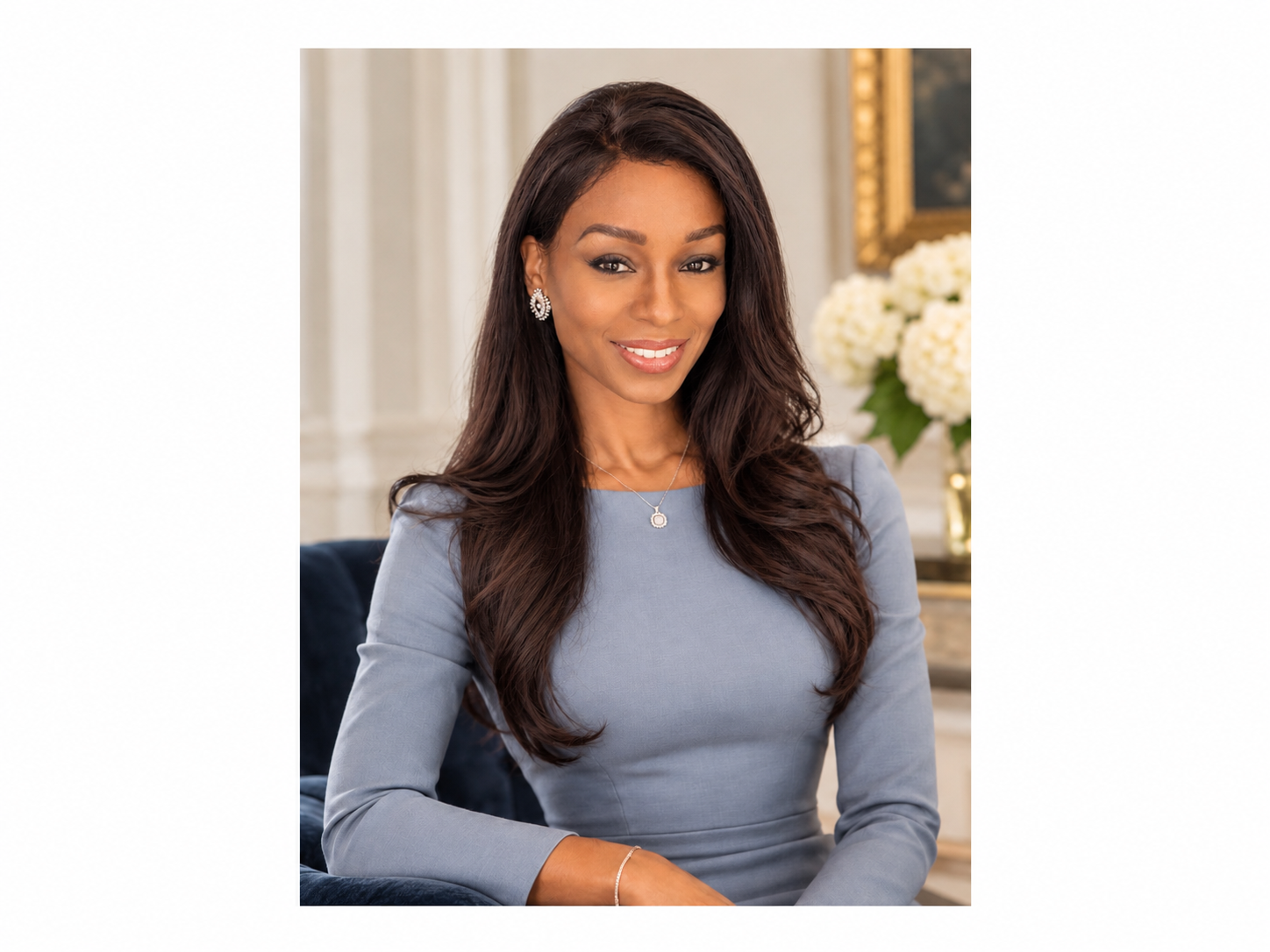
Melody, thank you for joining UK Private Wealth Magazine today.
Thank you for having me, I’m looking forward.
You’re equally at home in the corporate world, in private wealth and in the rooms where families make their most consequential decisions. How did you recognise that people with many advisors needed someone to hold the whole picture?
There were quite a few situations that eventually started to form a pattern, and I decided that it was worth taking the time to look at what was recurring, and why. Business as usual was always fine for principals, but faced with major change, they fell into either inertia or overcorrection.
So over time, I crafted a number of different models. My only focus was simplifying complex change. I wanted to build a business that could support the succession plans of a patriarch who planned to step back in five years, and would be equally effective at managing a merger. Radner had the winning configuration.
Succession is as much about family dynamics as legal documents. How do you bring people to the table?
Every family has a distinct ‘language’. In my experience, verbal interactions play only a tiny part in this. The real language would be the different personalities, idiosyncrasies, natural gifts, careers, interests, ages, often the different nationalities…these are the sorts of things that create the actual emotional reality of the family.
In politics and in the corporate world, the documentation can actually be the easy part. The truth is that some deals can be brokered after huge conflicts lasting decades, but some amicable boardrooms can collapse under the weight of one question. So we’ve got to ask ourselves what the variable is here, and it’s diplomacy.
People genuinely want to know what’s in their best interests. If diplomacy were saccharine and hollow, it just wouldn’t work. There’s an element of candour to it, but directness is only received well if the timing is right.
How do you know when to have those direct conversations?
I think experience creates that kind of sixth sense. Experience and good rapport!
You attribute a lot of your global outlook to your love of art and history…
I was born in England and was raised with lots of books and art around me at home. It was normal for world history and geopolitics to be discussed every day, and this does create a lens. I often think about the vast expanse of human history and all of the things that have been achieved. Throughout every era, people had to decide what ‘progress’ was going to look like. ‘Do we innovate, or do we let the status quo endure for a while longer and exercise a bit of caution?’ I think modern people have always existed, and traditionalists have always existed too.
Which resonates most for you? Modern or traditional?
Traditional, definitely! I’m an old soul.
What’s your approach to legacy?
Legacy can be an incredibly delicate matter. We need to focus on the fact that ‘legacy’ refers to the entire story. It encompasses all of the sacrifices that were made many years ago, the risks taken, the anxieties and sheer hard work. Legacy tends to be treated as a linear structure that stretches out only into the future, but I prefer to treat it as a timeline in both directions. Often tensions stem from people feeling misunderstood, irrespective of which generation they belong to.
It’s definitely possible to appreciate the past and look towards the future in a way that doesn’t jeopardise either. Things don’t have to be perfect right away. There just needs to be enough for people to sit around a table.
How would you describe your leadership style?
I’m even-keeled and very calm, which I think is suited to leadership. You have to essentially absorb whatever is taking place around you, no matter how stressful, and convert that energy into something constructive to give to the team. You have to think both for the unit, and as the unit.
Morale is about so much more than just positivity. It’s also about making sure that I validate people when they’re working extremely hard under pressure. I must acknowledge that yes, they’re facing a massive challenge, but it’s a shared experience, and we will get through it together. I always assume that success is a foregone conclusion and work backwards from there.
I am, admittedly, very particular! I like attention to detail, precision, initiative and presence of mind. And I believe in giving due credit to people who go the extra mile.
There has been a steep rise in global volatility and instability. How do we cut through the noise going forward?
We’re a few years away from the 2030s: the pace of everything has increased. Share prices plummet, regulations change, legacy media trails social media and public sentiment can turn literally overnight…I think private wealth needs to increase its agility and build new protocols. Resilience is something I think we’ll see grow increasingly valuable across the next few generations.
I foresee a key question being ‘Is this actually collectively coherent?’ That’s the difference between interoperable wealth and decisions made in a vacuum.
The coherence piece is one of the most difficult things for decisionmakers to get a vantage point on, because they’re immersed in the day-to-day. The moment options become ‘networked’ and morph into something other than a set of discernible categories, interdependence can become an issue. Tax is obviously a timely example, but we’re also seeing so much more fluidity in how people choose where to have their primary domicile.
Yes, global firms and families would like options, but not at the expense of a decision that has already been budgeted for and acted upon. That would be what I call ‘one step forward, two steps back’.
Would you mind walking us through what it means for wealth to be ‘interoperable’ rather than merely well-structured?
Wealth has often been structured extremely well for global families, so capital isn’t the only factor when I talk about interoperability.
When I assess interoperability, I’m looking at the extent to which the machine around the family is functioning as one unit. Even when advisory input is exceptionally good, the most under-leveraged asset is often effective communication. The question I ask myself is: ‘How do I make this harmonious? The orchestra needs to work together, so how do I make this less discordant?’
Everything needs to be moving towards the same target. Even trade-offs where a compromise or loss is made should be part of the wider strategy.
Whenever I ask clients to describe how it feels to receive conflicting or expired information, everyone relates very strongly, because we’ve all experienced the horror of that moment! We want intelligence to be actionable and add value. Informational integrity can degrade rapidly even in good conditions, so at today’s pace, and across time zones and languages, there must be an extra degree of care and specificity. Nobody wants to be a day late and a dollar short.
On the topic of intelligence, there’s a lot of debate around whether AI could be adopted so widely that it replaces trust between humans. Is that something you see happening?
Trust is a phenomenon, which is why it’s rare. It’s encoded in humanity to sense subtleties beyond language. I believe we’ll always gravitate towards human connection.
LLMs (Large language models) are growing increasingly convincing, but I think that’s part of the problem. Chatbots aim to convince, they’re ingratiating themselves to the user. If we take a moment to imagine what that interaction would feel like between two people, we’d intuitively know that the person standing in front of us had an agenda. Trust is also about bonding and feeling safe, and these things can’t be replicated.
People are talking about AI becoming the ‘new internet’. Do you think that’s a realistic possibility?
We’ve gone from filing cabinets to robots in the time it took for one generation to reach adulthood. Now we have a system that’s feeding itself with the data it’s supplied. The truth is that our information has been travelling further away from us incrementally.
But ruling information systems have made way for newer versions in the past, and each time, we gradually adapted. The telegraphic system was introduced in the 1840s and paved the way for the electric stock ticker. AI is what I like to think of as the ‘newest frontier’ of information rather than the ‘final frontier’ because at some point we’ll get an AI 2.0 and need to adjust again.
Cloud storage had already been on the market for years by the time that General Data Protection Regulation (GDPR) was introduced in 2016. Two more years elapsed before it became enforceable in 2018. It took such a long time for policy to catch up.
So, this does seem to suggest that the research, industry, policy and legislation around AI may need some more time to acclimatise before it becomes the default. I think legal enforceability will be one of the main talking points for a while. That’s likely to be a top priority for governments, multinationals and anyone with a sensitive dataset.
There has been a lot of discussion around the professionalisation of family offices. What is the value of understanding the new environment before making changes?
I’ve seen a lot of gaps between what families plan for and what is put in place. I try to impart the value of mitigation here, because risks have accelerated, and therefore response time has shortened. Privacy is a good example… thoughtful families now treat it as something much more dynamic than before. Privacy exposure can still result in reputational harm and unwanted media coverage, but I do expect to see an uptick in things like malware and extortion. It’s critical that anti-fraud and cyber professionals support us with this alongside law enforcement and specialist task forces.
Frankly, and despite its many positive applications, AI is another threat vector. Hostile actors, many of whom are highly skilled, can steal data, hold it for ransom or launch disinformation campaigns with both speed and precision. The private wealth space must be very careful to avoid underestimating the sophistication and persistence of hackers. Even if they’re unable to gain access to data immediately, there are documented cases of hackers stealing encrypted data and simply waiting until a means of decrypting it is developed.
Part of a strategist’s life is accepting that unforeseen things can and do happen. The key is having the ability to adapt quickly and without collapse.
Can philanthropy be a way for a family to find a shared voice?
I really think so, yes, particularly through the arts. I feel a collection can be a family’s autobiography to the world. We learn so much about people through the art they love. Provenance is often what makes something truly stand out, and these are the stories that get handed down from generation to generation. I hope that patronage of the arts continues long into the future.
What stays constant when everything else moves?
Kindness.
This article contains general information only and does not constitute investment or financial advice. The views expressed are those of the author.